Monday, June 19, 2006

Deliberate Complementarian Pastors

(HT Justin Taylor)

The following was written by CJ Mahaney on the Together for the Gospel Blog. If you aren't reading this blog, you should be!

_______________________________________________

Mark, Lig and Al, thanks for serving us big time with your insightful posts on this important topic. Please keep this stuff coming, boys. And Al and Mark, any possibility you guys could live-blog the Southern Baptist Convention this week? How exciting would that be? So, how about if you cover the SBC this week, and I will take responsibility for the U.S. Open (that would be an important golf tournament, Al and Mark)? Lig, who ya got in the World Cup?

Well, you have heard from three of my favorite scholars; and now it’s time to hear from a simple, but athletic pastor. Here’s my concern: It is all too easy for us to affirm biblical manhood and womanhood and humbly contend for the complementarian position, and yet fail to intentionally and consistently apply this body of teaching to our lives and churches. So this post is a reminder to us as pastors that we must not only proclaim truth but practice truth. Preaching on biblical manhood and womanhood is not enough--we must transfer this body of truth to every member of our churches. Complementarianism must be functional in our personal lives and in our churches, not simply professed. And we must not lose sight of the difference biblical manhood and womanhood can and should make for husbands, wives, children and singles.

Our responsibilities as pastors fall into two categories: Personal Application and Pastoral Strategy.

1) Personal Application

Our teaching on this topic will only be as effective as our personal example. Modeling precedes teaching. Biblical instruction cannot be divorced from personal example. We must provide our churches with a genuine (not perfect) model of biblical masculinity. It is possible to skillfully teach Genesis 1-3 or Ephesians 5 and yet neglect to apply these passages to our lives. So, let me ask you: Where and how are you going to demonstrate biblical manhood to your wife and children this week? What difference is your complementarian position going to make in your life and for those you love, lead, and serve? If I spent the week with you, would your conviction about biblical masculinity be obvious?

Gentlemen, here is a gift you can give to your wife this week. Set aside a few hours of uninterrupted time, and ask her to honestly evaluate your personal example of godliness and your leadership in the home.

I dare you to ask her this question:

Where do I need to grow in serving and leading you?

For bonus points, ask this question:

Where do I need to grow in serving and leading the children?

This one conversation could initiate dramatic changes in your life.

After you’ve talked to your wife, I would encourage you to relate the details to a fellow elder, pastor or friend. Invite their questions and observations and make yourself accountable to them for application. This step will weaken pride and cultivate humility. Because God gives grace to the humble, this is a very smart thing to do. In fact, it would be stupid not to, since God opposes the proud. So, let us avoid being mere advocates of the complementarian position. By the grace of God we must be functional complementarians, and this must be evident for all to see.

I double dare you to ask your wife that question.

2) Pastoral Strategy

Do you have a strategy for helping your church demonstrate biblical manhood and womanhood? If so, what is your strategy? What is your plan to clarify, cultivate and celebrate biblical manhood and womanhood in your church? This must be done intentionally, strategically and consistently--not occasionally. And it won’t get done if you don’t lead humbly, wisely, and boldly.

Here’s why: The members of our churches are daily being assaulted by a feminist worldview and culture. They are breathing feminist air each and every day. So do not assume that your statement of faith or last year’s teaching series are sufficient to protect your church from cultural or evangelical feminism.

Here’s how: Begin by thinking through each ministry in your church. Is biblical manhood and womanhood modeled and explicitly taught in each ministry? What about your children’s ministry? How about the youth ministry? The worship team? The counseling ministry? Thoroughly evaluate every aspect of your church, including the teaching diet on Sundays. Then devise a specific plan to channel this important body of teaching through each ministry of your church to every member of your church for every year you pastor the church.

Although I attempted to be brief and concise, this has once again become the never-ending post. My apologies. The fact is, I am not sufficiently gifted to be concise. But before I conclude, I must reaffirm that our motivation for biblical manhood and womanhood is the gospel. I am convinced that the complementarian position will strengthen the church in her God given-role to proclaim and protect the gospel. And the most effective apologetic (apart from Scripture) for the complementarian position is marriages, families and singles who radiate the beauty and wisdom of God’s plan for men and women. Biblical manhood and womanhood is the life-transforming effect of the gospel on full display. When a church teaches, practices and honors gender distinctions determined by our good and wise God, the gospel will advance. But this will only happen where there are humble and courageous pastors who lead every member and ministry of the church by personal example and with strategic pastoring.

Related Tags: , , , , , , , , , , , , , , , , , , , , , , , , ,

Friday, June 16, 2006

Judge Upholds "In God We Trust"


From FotF's Pastor's Weekly Briefing

A federal judge this week rejected a lawsuit by an atheist who claimed that the use of the motto "In God We Trust" on U.S. coins and currency is a violation of his First Amendment rights.

In his judgment against Sacramento doctor and lawyer Michael Newdow, U.S. District Judge Frank C. Damrell ruled that the phrase "In God We Trust" is a secular national slogan, and its appearance on coins and currency does not show government coercion on behalf of monotheism, and does not trample on an individual's religious views. Newdow lost an effort two years ago to have the Pledge of Allegiance banned from public schools because it contains the words "under God." The U.S. Supreme Court ruled in 2004 that he lacked standing to bring the case because he didn't have custody of the daughter on whose behalf he brought the case.

Newdow then filed an identical lawsuit on behalf of parents with children in three Sacramento-area school districts. In September, a federal judge in Sacramento sided with Newdow, and the case is pending before the 9th U.S. Circuit Court of Appeals. Newdow said he plans to appeal the currency decision, as well, to the same appeals court.

The motto "In God We Trust" first appeared in 1864 on the two-cent coin, and then since 1938 on all U.S. coins. In 1956, a Joint Resolution of Congress established "In God We Trust" as the national motto of the United States, and the next year it first appeared on paper money.

Related Tags: , , , , , , , , , , , ,

Tuesday, June 13, 2006

Words of Life

By Dr. James MacDonald

Proverbs 15:4 “ A gentle tongue is a tree of life, but perverseness in it breaks the spirit.”

James 1:26 “If anyone thinks he is religious and does not bridle his tongue but deceives his heart, this person’s religion is worthless.”

Without exception, all of us know first-hand what a blessing and what a weapon words can be. Throughout Proverbs and James we read that life and death are in the power of the tongue.

“A gentle tongue is a tree of life,” says Proverbs 15:4. Tender, good words, spoken from the heart, at just the right time promotes joyful relationships. But the flip side is also true, “ but perverseness in it breaks the spirit.” Perverseness means “crooked.” Perverseness is twisting someone’s words so they’re distorted from what they meant. Perverseness brings hurt and harm. Proverbs 15:4 says those kinds of words have the power to break the spirit; it’s painful to admit—we shatter and wound those we love with the words we say.

Maybe you wonder why your spouse keeps their distance. Why can’t I connect with my son? Why am I not close to my friend like I used to be? Ask yourself, “Have I wounded their spirit by something I’ve said to them?” When a person’s spirit is injured, they close themselves off to you. They put up a wall. Ask God to bring to your mind the gentle words to say to them to make it right.
Start with these five things:

#1 A word of regret. Go to your loved one and say, “I’m sorry.” Don’t let yourself off with the big catch-all “sorry.” Be specific. Say, “I’m sorry I said this,” “I’m sorry I did that.”

#2 A word of responsibility. “It’s my fault. I have no excuse. Please forgive me.” Sure, others have a role in the conflict, but you can’t fix anyone else. Do your part.

#3 A word of hope. “I’m going to try harder.” Again, be specific. “I’m going to try harder at affection; I’m going to try harder at attention. I’m going to try harder at listening to you.”

#4 A word of commitment. “I’m here for you. We’re going to get through this together. Nothing will change my love for you.” Make sure your loved one knows that. Most people will flourish in that commitment.

#5 A word of affection. “I love you.” Say it sincerely. Say it till it comes easily from your lips. If you didn’t grow up with that kind of affirmation, you might need to work a little harder at this one, but break the chain and be the solution in your family.

Think honestly about the words spoken in your circle of loved ones. Today, you have the power to bless or to hurt them. Choose to plant the tree of life by the words you say.

Related Tags: , , , , , , , , ,

Thursday, June 08, 2006

Marriage in the news...

From FOTF's Pastor's Weekly Briefing:

This week, the procedural vote on the Marriage Protection Amendment — a proposed amendment to the U.S. Constitution to define marriage as the union of one man and one woman — failed to get the required 60 votes so that a vote on the amendment itself could take place. The final tally was 49-48. "The outcome was clear: 48 Senators voted not to consider the MPA and have left the future of marriage to the courts," noted Tony Perkins, president of Family Resource Council.


Focus on the Family Action chairman James Dobson was outraged. "The 48 senators who voted against the MPA this week have left the definition of marriage at the mercy of activist courts intent on forcing a politically correct agenda on our nation. Judges already have struck down marriage-protection laws and amendments in Massachusetts, Nebraska and Georgia. They will continue to do so unless checked; that's the Senate's job, and it has failed at it."


President Bush thanked those who supported the amendment, but expressed disappointment that the measure did not achieve the necessary number of votes. But he also sent a reminder that it can take several tries before an amendment builds the two-thirds support it needs in both houses of Congress. "My position on this issue is clear: marriage is the most fundamental institution of our society, and it should not be redefined by activist judges," he said. "The people must be heard on this issue."


• Alabama is now the 20th state in the U.S. to pass a marriage-protection amendment, and it did so by one of the largest majorities yet: 81 to 19 percent. Voters in six more states will get the chance to do the same soon: Idaho, South Dakota, South Carolina, Tennessee, Virginia and Wisconsin will vote on marriage-protection amendments in November. And several other states, such as Colorado, are close to adding such an initiative to their ballots.


• The Canadian Parliament last year redefined marriage as a union between "two people," rather than the traditional definition of "a man and a woman," a position that conservative Prime Minister Stephen Harper announced last weekend will be put to a vote again this fall. Both homosexual/lesbian activists and supporters of the traditional marriage definition are predicting a close battle in the House of Commons, with both sides promising to use the lengthy summer parliamentary break to galvanize support, CNSNews.com reports.


Related Tags: , , , , , , , , , , , , , , , , , , , , , , , , , , , , , , , , , , , , , , , ,

Wednesday, June 07, 2006

Death by Ministry - burnout...

Mark Driscoll of Mars Hill Church in Seattle wrote the following on his blog in addressing pastoral burn out.

----------------------------------------------------------------------------------------

Part 1 — Some Statistics
The following statistics were presented by Pastor Darrin Patrick from research he has gathered from such organizations as Barna and Focus on the Family.

Pastors

* Fifteen hundred pastors leave the ministry each month due to moral failure, spiritual burnout, or contention in their churches.
* Fifty percent of pastors' marriages will end in divorce.
* Eighty percent of pastors and eighty-four percent of their spouses feel unqualified and discouraged in their role as pastors.
* Fifty percent of pastors are so discouraged that they would leave the ministry if they could, but have no other way of making a living.
* Eighty percent of seminary and Bible school graduates who enter the ministry will leave the ministry within the first five years.
* Seventy percent of pastors constantly fight depression.
* Almost forty percent polled said they have had an extra-marital affair since beginning their ministry.
* Seventy percent said the only time they spend studying the Word is when they are preparing their sermons.

Pastors' Wives

* Eighty percent of pastors' spouses feel their spouse is overworked.
* Eighty percent of pastors' spouses wish their spouse would choose another profession.
* The majority of pastor's wives surveyed said that the most destructive event that has occurred in their marriage and family was the day they entered the ministry.

Part 2 — Some Signs
The following are indicators that ministry leaders are heading toward burnout, if not already there. Sadly, we too often become so focused on our tasks and responsibilities that we fail to see these warning signs until it is too late.

* Unusual mood swings that may include weeping without just cause, anger, or depression
* Exhaustion
* Paranoia and suspicion
* Weight change, including gain or loss
* Moments of panic and feeling totally overwhelmed
* Fantasizing about dying or running away to get away from the pressure
* Fight-or-flight cycles where you rise up to intimidate and conquer others or run away from difficulties just to avoid them
* Insomnia, including difficulty falling asleep or remaining asleep, which can lead to a reliance on sleeping pills
* Too frequent use of alcohol or tobacco
* High blood pressure
* Comforting yourself with unhealthy foods packed with fat, sugar, and simple carbohydrates
* General irritability
* Reckless driving
* Change in sexual desire of either noticeable increase or decrease
* Notable ongoing sexual temptation
* Health-related issues such as irritable bowel syndrome, headaches, heart trouble, chronic sickness, and stomach problems including ulcers
* A victim mentality that sees the world as against you and everyone as an enemy to varying degrees
* Shopping sprees and unnecessary financial spending
* Reliance on caffeine to self-medicate
* Children, friends, and loved ones begin to feel like yet another burden

Part 3 — Some Solutions
The following are simply some things I do in my own life that I have found helpful to prevent me from dying a death by ministry.

1. Fill your plate — In a conversation with Pastor Wayne Cordeiro of New Hope Christian Fellowship in Hawaii, he gave some very sagely advice. He said that each person’s plate is a different size; each person needs to first find the size of their plate and then fill it only with those things that are of highest priority. And, before adding any additional things to our full plate, we must take something else off to leave space for the new duty. Finding the size of one’s plate takes time and attention. For example, I have personally seen that high-level leaders have an energy level that is unusually high and those working under them who seek to keep up with their pace find themselves quickly burning out.

2. Exercise — Sadly, most pastors and Christian leaders I know are woefully out of shape. Many of them pound their pulpits against rock music and alcohol while their huge gut jiggles in mockery of their own gluttony. In the early years of our church plant, I ate poorly, slept infrequently, and lived off of the constant adrenaline of perpetual stress. As a result, I weighed 235 pounds at my highest point. Through regular diet and exercise I dropped back down to a lean 190 pounds. But in the past year I have seen my weight climb back up to 210 pounds as my diet and exercise routine has been trashed by laziness, travel, and the constant state of emergency. So, yesterday I cleaned out my garage and plugged my treadmill back in so I can resume daily running and lifting conveniently at home. I got started exercising this morning. I find that when I work out, I drop weight, feel better, sleep better, and am better able to lead out of health with energy. The experts say the best time to exercise is in the morning and those who work out early in the day are most likely to remain on an exercise regimen.

3. Do not allow technology to be your Lord — A recent issue of Fortune magazine had an insightful article about the average day of some of the most successful CEOs in the country. These people lived lives ruled by technology, including spending whole days each week doing nothing but obsessively responding to every single email they received. The article mentioned that the average American worker is interrupted once every eleven minutes and takes twenty-five minutes to refocus on their original task. The problem is that the alarms and bells of our technology deceive us into reacting to them even when the matter they call us to is neither urgent or important. So, turning off the chime and vibrate on your phone, only checking your voicemail and email on certain days at certain times, and turning the notification off on your email will itself go a long way toward your healing. You won’t have the unpredictable fire drill caused by the bells of technology. Imagine what the world must have been like before the 1200s when the first mechanical clock was invented, or before minute and second hands were added in the 1600s, or before 1879 when Edison produced the first light bulb, thereby enabling us to stay up all night.

4. Sabbath — This includes taking five minutes off every hour to catch your breath, go for a walk, stand up at your desk, etc. It includes taking thirty to sixty minutes off a day to nap, go for a walk, read, garden, or whatever else releases your pressure and helps you to relax. This also means taking one day off a week to Sabbath, including a date night if you are in a serious relationship or married. This also includes a day or two off a month for silence and solitude and a few weeks a year for an actual vacation that does not leave you more tired than before it began.
5. Pick a release valve — Because ministry causes pressure, any leader without an acceptable release valve will either burn out from stress or blow up from sin. So, the key to releasing pressure is to find and use an acceptable release valve. This may include exercise, gardening, a hobby, journaling, or my favorite, dropping the top on my Jeep and heading into the mountains for a day of adventure to find new lakes to swim in.

6. Work on your life, not just in it — Rather than just pulling more hours and trying harder, time needs to be regularly taken to pull back and look at your life so that you can work on it rather than just run in it. For me this includes printing out my schedule every few months to review how I spent my time and inform my assistant of what was a waste of time that should not happen again. This also means taking time to read books on the issue of time management and burnout and biographies of great leaders to learn from their lives, and possibly even taking time to meet with a Biblical counselor to get insight on your own life and tendencies.

7. Leave margin — When we push our bodies, schedules, minds, and budgets to the point where there is no margin, all that it takes to destroy us is one unforeseen expense, one small emergency, or one small cold. Therefore, leaving margin is the key to not being crushed when life does not go according to plan. This means leaving extra money in the bank, leaving extra time between appointments, and preparing to arrive at places early so that if there is traffic you will still be on time and not stressed.

8. Spend most of your time training leaders — While thousands of people came to see Jesus, only a handful really knew Him, and only three knew Him intimately. This is because Jesus spent his time training leaders to do ministry and without doing the same we will die from our work and sadly see it die with us as well.

9. Work from conviction, not guilt — Conviction comes from God and guilt comes from people. The key to being both fruitful and healthy is to do what God wants and not always say yes to or let yourself be pushed around by people who are demanding and have perfected the art of making you feel guilty if you do not do what they demand.

* Originally prepared for an elders' meeting at Mars Hill Church on May 22, 2006.


Related Tags: , , , , , , , , , , , , , ,

Tuesday, June 06, 2006

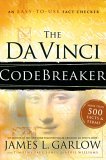
The DaVinci Codebreaker - by James L. Garlow


Having now seen the movie "The DaVinci Code" I thought it was time for me to unveil my review of James L. Garlow's book "The Davinci Codebreaker". I am not paid for this review, but I was given a free copy through Active Christian Media (what used to be called "Mind & Media").

The cover of the book states that it is "An Easy-To-Use Fact Checker" and it lives up to that end. Think of this book as a dictionary of apologetics for the book and movie. The authors research is thourough, and very comprehensive. He's thought of things and made connections that I believe few others would. As a Seminary student, some of the book's entries are review of things I studied in classes like Church History, but there is quite a bit of information that I found new and interesting. An example of it's exhaustiveness would be that rather than just referencing the Gnostic gospels that are mentioned in the book/movie, Garlow goes far beyond that and defines many other Gnostic gospels that never come into play. There are more than 500 facts and terms in this book, all of which are well written and informative. This would be a book I highly reccommend adding to your library as an apologetics tool. Unfortunatly with the way Dan Brown falsifies truth, books of this nature are necessary.

The practical applications of this book are limitless. Even if you didn't see or watch the movie you could learn a lot from just reading this book, as it is full of useful information seperate from it's intended goal of being an apologetic on The DaVinci Code. This is not a reader book, as it is written in a dictionary format, with alphabetical entries chosen by their relationship to the book/movie and the subjects in the book/movie. Go and get a copy, so when your friends, co-workers, and family start asking questions you can respond in an informed way. This book gives the facts that refute Dan Brown's fiction portrayed as fact.

I would pair this book with Lee Strobel's "Case for Faith" as a good one-two punch for anyone who finds they want to know more about Christianity and how it is so poorly represented by the careless pen of Dan Brown.

Related Tags: , , , , , , , , , , ,

Sunday, June 04, 2006

The DaVinci Weekend...


Last night my wife and I went to see "The DaVinci Code" at the Carmike 20 Theaters in Oakdale, MN. We were actually hoping to catch Ice Age 2, but it wasn't showing, as we arrived late following a graduation party for my friend Bert Foster. So after a few moments discussion we decided it was time to catch the movie, and see what people were talking about. Neither of us have read the book, so it was good that we got to see the movie.

Generally, I thought the movie was entertaining. There were certainly parts that drug on a bit, but from a theatrical viewpoint it was pretty solid. From a factual standpoint it was anything but. I knew some generalities about what the controversy was over with this movie, but having now seen it, I see why some find it very offensive. Dan Brown has framed a fictional work around a few real names, dates and locations and has quite intentionally done his best to undermine Truth and to supplant it with his own fictional truth. Having a seminary education, an undergraduate in History, and a general interest in Church History, many things immediately jumped out to me as enormous distortions and falsehoods. I found myself wondering how many others in the theater were as perceptive. It's a sad commentary on the state of the church when such blantant falsehoods can challenge people's faith. I could make up anything I could imagine and include 4-5 historical people's names, 4-5 true locations and come up with an equally "true" story. The items Dan Brown wants the viewer/reader to believe as fact are indeed fiction. To put it bluntly, Dan Brown is so full of it his last name is quite apt.

My wife didn't like it as much as I did from a pure theatrical viewpoint. She found the end to be frustrating in that it seems to come to an end 3 times before it really finishes, and its actual finish is pretty lame. It did build good suspense, and there were a few times my wife averted her eyes from the screen. She jumped pretty good a few times as well. I could (as could my wife) see how this movie might be particularly offensive to catholics.

This morning we attended church at Eagle Brook Church in Lino Lakes, MN. Bob Merritt had the week off, and Teaching Pastor Jason Anderson filled in quite nicely. This was the first week of a 4 week series the church is doing on the DaVinci Code. Their series is called "The DaVinci Dillema" and it is intended to equip the attenders of Eagle Brook to have fruitful conversations with their friends, families and co-workers who are reading this book and viewing this movie. Jason did a great job breaking down how it is clear that Mary Magdalene was NOT Jesus' wife, nor was she the "holy grail".

The worship was excellent as always at Eagle Brook. As an offeratory song the worship team played "Where the streets have no name" by U2 and did a very good job of it. There was one song they played that nobody in the sanctuary seemed to know, and it plodded a bit, but other than that it was great music. The weather was beautiful, and the drive to the church and home was quite enjoyable. They still really need to work on reducing traffic congestion in their parking lot. It frequently takes as long to get out of the parking lot as it does to complete the 15 mile journey home, and that is without bad weather. Today we also went to the last service of the day, which means less traffic because nobody else is coming into the lot for the next service. I'd be curious as to how other large churches handle this. I've attended Woodland Hills Church (Greg Boyd's church) on numerous occassions and haven't noticed it being quite this bad. Granted, that church isn't as large, but it is in the city as opposed to out in the farthest reaches of the suburbs where traffic is always light. Bethlehem Baptist (John Piper's church) in downtown Minneapolis has some problems when the Vikings are playing or when there is an early Twins game. Wooddale (Leith Anderson's Church) in Eden Prairie has very good traffic flow (and is again a smaller church than Eagle Brook, but is also more in the city). I've been to a number of other very large churches and not seemed to experience this level of traffic issues. It'll be something to watch, and I hope they get it figured out.


Related Tags: , , , , , , , , , , , , , , , , , , , , , , , , , , , , , , , , , , , , , , , , , , ,

Thursday, June 01, 2006

Not the Promised Land, but a land with promise


For the three best summers of my life I worked at the Philmont Scout Ranch. 1994 and 1995 I was a Philmont Ranger, where I was effectively a backpacking guide (and at times babysitter) for the groups who came through the camp. In 1996 I moved into the Conservation Department where I was a Trail Crew Foreman. This job mean 18 days on a work site with 15 16-20 year old men building backpacking trails 12-14 hours a day. It was very rough work, hot, dusty, and somewhat dangerous. But it was also fun, educational, and beautiful. The payoff was that after 18 days they got to go on a 12 day backpacking trek of their choosing across the ranch. Because they had been acclimated for so long, were all generally in very good shape, and were ambitious we were able to cover rediculous milage in comparison to other groups. I could honestly talk for the next week and not run out of things to say, stories to tell about these three summer. Below is an article that captures a small bit of that experience. I remember getting my first hire letter. I think it is still in a box at my parent's house. Oh to be free again...

From The Charlotte World:


Not the Promised Land, but a land with promise
By Warren Smith


This Memorial Day, as most of the country was enjoying a long weekend, I was
driving across the country, on a long-distance road trip with my 20-year-old
daughter Brittany.

But before I tell you that story, let me back up a bit. You see, 30 years
ago this summer - indeed, 30 years ago this very week -- in June of 1976, I
began a job at Philmont Scout Ranch in Cimarron, New Mexico. You may have
heard of Philmont. Certainly if you've ever been involved in the Boy Scouts
you have, because Philmont is the largest Boy Scout Camp in the world. Each
summer, more than 25,000 Scouts and adult leaders go there, and they are
served by about 1000 seasonal staff members. Thirty years ago, I was one of
those staff members. And, for that matter, so was my wife, Missy. That's
where we met, at Philmont. And almost 10 years later, in 1985, we worked
there again as husband and wife. We were both teachers who had our summers
off, so it was also at Philmont that we discovered that we were expecting
our first child, this same Brittany.

This summer Brittany herself would be working at Philmont -- in exactly the
same backpacking guide job -- they're called "rangers" -- that I had 30
years ago.

So on Saturday of the Memorial Day weekend, Brittany and I got in her little
car at 5:30 in the morning, and started driving West. We had a sense, as

Huck Finn famously said, of "lighting out for the territory." Robert Penn

Warren less famously, but more directly, said that the West is where
Americans have always gone to flee their lives, to remake themselves. To
lose themselves, and to find themselves.

As we turned on to Interstate 40, which for much of its way follows the path
of the famous Route 66, all the way to Santa Monica Pier on the Pacific
Ocean, Phantom Planet's "California" came up randomly on the CD player. It's
a song that many people today know as the theme for the television program
"The O.C." But, more to the point here, it's a bittersweet song about
reaching the end of the road, literally and spiritually. "California here I
come, right back where I started from." The words are from an old "Tin Pan
Alley" song, but the minor chords give this version a new meaning. The
earlier song was one that fully embraced the idea of a Golden West. But
this new version, with its minor chords, said something different. It said

this: "What you discover at the end of this road is that there's no
avoiding yourself. No matter where you go, there you are."

We were not going all the way to California, but we were headed into the Far
West, ending up in Santa Fe by Sunday evening. And on this trip I would not

go all the way to Philmont, either. This summer I would not, as Brittany

would be able to do, throw away my watch and walk as I pleased in the Sangre
de Cristo Mountains, named for the cleansing Blood of Christ. For me, now,
there was not enough time. I had to get back home and get to work. Like
Moses, who led his people out of bondage but did not get to enter the
Promised Land himself, so I had to return to the captivity of work, and the
tyranny of the clock. But Brittany is a part of the Joshua generation, the
generation that gets to enter the Promised Land. At least for now.

So on Memorial Day Monday, the third day of this expedition into the West, I
catch a shuttle from Santa Fe to the Albuquerque airport and fly back to the
East. Brittany would drive the last two hours to Philmont on her own.

As I sat on the plane, literally on the runway in Albuquerque, my cell phone
rang. It was Brittany. There was excitement in her voice. "I can see the
mountains," she said, almost yelling into the phone above the road noise and
the sound of her specially burned "road trip" CD. She called their names to
me over the crackly cell phone, and I thought about how oddly appropriate
these names were for this conversation. Brittany didn't know it, but she
was describing my world at mid-life: Baldy. Touch-me-not. The Tooth of
Time.

The flight attendant gave me a hard look that meant I had to turn off my
"portable electronic device." So I told Brittany I loved her and hung up.
What this summer held for her I did not know. Sure, I had an inkling, but
every generation must make the journey for itself, and every journey is
different.

I did, though, recognize that excitement in her voice. It was the same
excitement I had, at times, heard it in my own. It was the excitement you
feel when you are at the edge of -- well, not exactly the Promised Land, but
a land of great promise.


And you are about to enter in.

----

Warren Smith is the publisher of "The Charlotte World." He can be reached
at warren.smith@thecharlotteworld.com

Other Philmont Links
Philmont
Giardia Club
Phil Roman's Philmont Page (I was a Ranger with Phil, and his page is one of the BEST!)


Related Tags: , , , , , , , , , , , , , , , , , , , , ,

Sunday, May 28, 2006

Ordination Service for Justin Irving...


Today was Justin Irving's ordination service at Immanuel Baptist Church in South Minneapolis. I have served this past year as Justin's teaching assistant at Bethel Theological Seminary in the Transformational Leadership department. Immanuel Baptist Church is located on the corner of 26th Street and 36th Ave in South Minneapolis. The address is:
3620 East 26th Street
Minneapolis, MN 55406
612-724-2004

I was asked by Justin to participate in this service and read 2 Corinthians 5:11-21 to open the service. This is a beautiful passage, and contains one of my favorite segments of scripture in 2 Corinthians 5:17.

Dr. Mark McCloskey gave a charge to Justin from Ezra 7:10 and Romans 1:16 that was outstanding. His four main points were:
1) Set your heart to study God's word
2) Practice it - Practice what you study - do it - live it out (2 Tim 4:2)
3) Teach it - Defend it
4) Spread God's Word - Missional Evangelist (Acts 13)

Pastor Brent Nelson also gave a charge to Justin from 2 Timothy 4:1-5. Reprove, Rebuke, and Exhort. His four key points were:
1) Preach to yourself first.
2) Preach to your family second.
3) Preach to the church third.
4) Preach to the world fourth.
He included a good quote from Richard Baxter.


We arrived to the church later than I had hoped to this morning because the directions given by Google Maps are wrong unless you drive a flying car. There is a set of train tracks that run between 27th and 26th Streets that is not indicated on Google Maps. So I had to drive around the neighborhood looking for a way over or under the tracks. Of course I chose the wrong direction and went West first. After circling around a few blocks and seeing no way across we headed back East. When we Got to West Mississippi River Road we went North and were able to drive under the tracks. A bit more stress than I wanted before having to get up in front of an unfamiliar church and read God's Word. I also didn't want to add any stress to Justin's day by being late (we were still 10 minutes early, but that is when people start sweating if you are showing up or not).

It was clear early on that the influence of John Piper was deep and wide in this church. It oozed out of all who were there in their language, especially in prayer. After the service I discovered that the church is a daughter church of Bethlehem Baptist Church. Brent Nelson worked with Bethlehem before getting Immanuel off the ground. Many in the congregation shared the vision and joined in on starting this neighborhood church. Justin Irving has also served at Bethlehem Baptist in various capacities in the past. I dug around the Desiring God site and found a message from Dr. John Piper where he even mentions Pastor Brent Nelson and the starting of this church.

If you are in South Minneapolis, or anywhere near Minneapolis for that matter and are looking for a church home, this is an excellent choice. The theology is going to be the same as that of Bethlehem Baptist Church, but the church is much (MUCH!) smaller. They are doing great things and are reaching their neighborhood. I pray that God richly blesses this congregation and this neighborhood through its ministry.


Related Tags: , , , , , , , , , , , , , , , , ,

Tuesday, May 23, 2006

Increase in Religious Behavior

(from FotF's Pator's Weekly Briefing)

Bible reading, small group participation and adult Sunday school attendance are religious activities that have seen an increase in the last decade, according to The Barna Group's annual tracking of religious behavior, which can be found at www.barna.org.

The most prolific jump in activity relates to Bible reading. Bible readership plummeted to a 20-year low of just 30 percent in 1995. But after several years of stalled growth, it has now hit a high of 47 percent of adults reading the Book during a typical week, other than when they are at church. This is the highest readership level achieved since the 1980s.

Church attendance has increased slowly in recent years. While we have not returned to the 49 percent of adults who attended in a typical week as recorded in 1991, there has been a significant rebound from the 37 percent recorded in 1996, climbing to 47 percent in 2006.

Involvement in small groups that meet for Bible study, prayer or personal relationships — other than Sunday school or Christian education classes — has reached a new high in 2006. Currently, nearly one out of every four adults (23%) is engaged in such a gathering during a typical week. A decade ago, one out of every six adults (17%) did so.

Church volunteerism has returned to its 1991 level of 27 percent. Volunteering at a church has been one of the more stable measures during the past 15 years, ranging from a low of 20 percent to the current high.

Adult Sunday school attendance has risen in recent years from 17 percent (recorded in 1995 and 1996) to 24 percent in this year's tracking survey.

The only two religious behaviors which did not reflect significant change were prayer — slightly more than four out of five adults claimed they had prayed in the past week — and evangelism — with six out of ten Christians claiming to have shared their beliefs about Jesus with someone whom they knew believed differently.

Related Tags: , , , , , , , , , , , , ,

Saturday, May 20, 2006

Georgia's Gay Marriage Ban Struck Down


A state constitutional amendment to protect marriage, that was overwhelmingly approved by Georgia voters in 2004, has been struck down by a judge who ruled that the measure violated the state's single-subject rules for ballot questions since it addressed issues other than gay marriage, such as civil unions and the power of Georgia courts to rule on disputes arising from same-sex relationships.

"People who believe marriages between men and women should have a unique and privileged place in our society may also believe that same-sex relationships should have some place — although not marriage," said Fulton County Superior Court Judge Constance Russell, who made the ruling. Georgia Gov. Sonny Perdue said he was let down by the decision, and that he would call a special session of the Legislature to propose another amendment to ban same sex marriage. "I am very disappointed by this decision to countermand the people of Georgia's voice in defining marriage in our state as a union between a man and a woman," said Perdue. "The people of Georgia knew exactly what they were doing when an overwhelming 76 percent voted to support this constitutional amendment."

Mike Johnson, senior legal counsel at the Alliance Defense Fund, said that the ruling underscores why it's important in the planning stage to make sure the language in a marriage amendment will survive a court challenge. He also stressed that this ruling reminds us why there is a dire need for a federal marriage-protection amendment.

Related Tags: , , , , , , , , , ,

Friday, May 19, 2006

Are you going to church?

(from FotF)

Church Attendance Revisited

The results of a new study which were released this month by the Gallup Organization, reveal that members of the Church of Christ are most likely to attend worship services most often. Members of the Church of Jesus Christ of Latter Day Saints came in a close second.

The research, which was based on Gallup interviews conducted between 2002 and 2005, showed that 68 percent of Church of Christ members said they attend services at least once a week, or almost every week and 67 percent of Mormons said they attend as often. When all religious bodies in the study are factored in, including Catholic and Jewish, only 33 percent said they attend religious services weekly or almost weekly.

Other research that has been done in recent years suggests that actual church attendance may differ greatly from the level of attendance that is reported to a pollster. Year after year, about 40 percent of Americans tell researchers that they attended religious services in the last seven days. Some studies, which looked into denominational membership and attendance statistics, as well as estimates of membership and attendance for independent congregations, found that actual weekly church attendance may be as low as 20 percent. Research has also shown that asking people what they did the previous weekend produces very different results than asking if they went to church. Those who see themselves as faithful church members and "weekly attenders" find it difficult to report that they did not attend services. Some believe that many studies have simply revealed what people believe they should do, rather than what actually took place when questioned about church attendance.

Related Tags: , , , , , , ,

Sunday, May 14, 2006

Relevance Conference at Eagle Brook Church

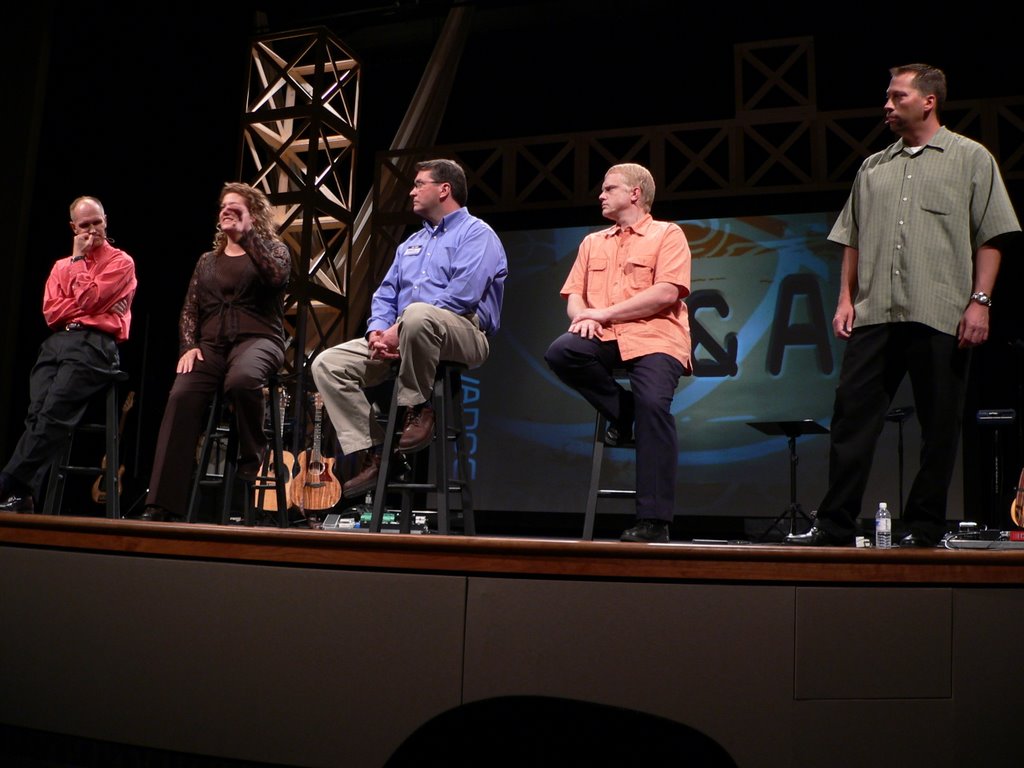
(pictured L to R: Bob Merritt, Amy Anderson, Dale Peterson, Scott Anderson, and Jason Anderson)

Thursday of this past week I had the opportunity to attend the 2006 Relevance Conference put on by Eagle Brook Church of Lino Lakes, MN. Eagle Brook is technically now a multi-site church, as it still has services and other on-goings at it's original White Bear Lake campus as well.

The conference was wonderful. While there was no bad part, the part that really hit me the most was the times of corporate worship led by Matt Berry and Steve Duede, along with a band and worship team singers. I am constantly amazed at the collection of talent that has assembled at Eagle Brook Church. They would be the first to tell you that they are fortunate to have either Matt or Steve, and they have both. As I have stated on this blog before, they use mutiple elements to create a wonderful experience during their times of worship. First, the sound is without peer. It's clear wherever you sit. No echos or muddied sounds. The highs are crisp, and the lows rumble out of their generous subwoofers. Second, they use lighting better than any other church I have been in. Everything from simply raising and lowering lights, to colored lights and focused lighting to set a mood appropriate for the musical selection. Third, the musical selection is always incredibly well chosen. Fourth, the skill of the musicians is astounding. Fifth, they play for an audience of One. What they are doing reaches people in deep and meaningful ways. Most churches are simply satisfied with hoping the music doesn't drive people away.

The idea of the Relevance Conference is for Eagle Brook to share with surrounding churches what they are doing and what has and has not worked. They do this very openly to help build up neighboring churches, with the mindset that churches are NOT in competition with each other. I agree, and appreciate their investment of time, talent and finances to see this through. They share with whoever comes, answering whatever questions you might have. It is their hope that you can take things from the conference and modify them to fit your setting. They aren't telling you how to replicate what they are doing, this is not a "buy our program" type of event. The leadership team (pictured above) all present different sessions throughout the day, meaning you get to hear from the very top level people, the ones making decisions and effecting change in the church. A very good value for $40 (I think that is what registration was anyhow).

The first session of the day was led by Scott Anderson, the Executive Director of Operations. Scott's talk was titled "Can we paint that?" He gave some very good insights into how to go about making changes in a church (or really anywhere for that matter). His key point was that people need to understand the "why" if you are going to be able to make the needed changes. You have to discern if it is the right decision, if it is the right time for the change, and then get your stakeholders buy in before rolling the change out. To shortcut any of those steps can be disasterous.

The second session was Dale Peterson talking on "Can we do that?" Dale is the Exectuvie Pastor of Ministries, and he directly oversees the White Bear Lake campus on weekends. He talked about reducing the "whack-factor"- the unexpected part of change or of the impact of change. Dale went over the prioritization of beliefs, then values, purpose, mission, strategy, and goals all building one each other. He harped on the fact that you never change your beliefs and values, but that your strategy and goals will be constantly evolving. Dale also spoke about creating ownership in the people of your church, and that without that, you will struggle to accomplish anything of lasting significance.

The third session was led by Amy Anderson, Executive Director of Worship Ministries. Amy's talk was likely the most immediately impactful of the day because her topic was very concrete things. She spoke on "Can we see that?" and the main thrust of her session was figuring out where we can improve our weekends as churches. Can we improve in quality, creativity and relevance? We must. She highlighted 4 areas - video and media, music, technical area, and production. The one thing that she said that probably created the largest "stir" in those in attendance was the fact that at EBC they NEVER have more than 3 announcements from the stage. I didn't sit in on her break out session later in the day, but I would guess she fielded a number of questions covering that. I agree with all of what she said, and I appreciate the level of quality that EBC has on weekends. Their standards are higher anywhere else I know of, and it shows in every area of their worship services. They have grown over 3000 people in the past 4 months. This is not an ego thing for them, they don't run around bragging about this, but clearly God is moving in signficant ways in this church. The weekend worship services are so outstanding that people are nearly begging their unsaved friends, co-workers and family members to come to church with them. How many churches could benefit from this?

The fourth session was led by Senior Pastor Bob Merritt. Bob spoke about the four things that their staff have intentionally worked on to increase the effectiveness of their messages. His first point was that they have raised the risk factor in their messages. They don't shy away from things that will offend people, because the Gospel is offensive in its very nature. There is simply something about the truth that will offend people, and the Bible is Truth with a capital "T". His second point was that they insist that there be humor in all of their messages. It causes people to let their guard down, it disarms them. It gives you permission to deliver hard truth that people would otherwise be shut up against. The third point was to search for story. In our media driven age with very short attention spans, people connect well with story. Furthermore, it is the form Jesus primarily chose to communicate, and we likely can't improve on what Jesus has done! They use what they call "topositional messages" which combine both topics and expositional development of the topics. The fourth point was that every sermon gets the imput of a team as it is being developed. They get together on Monday afternoons after the person has been writing the sermon all morning and brainstorm off of what has been developed to that point. They come up with illustrations, stories, quotes, songs and video clips to name just a few things. These are drawn on by the sermon writer to create a better message. There are a few subsequent spots of refinement, but this is a key one to their sermon writing process. I can vouch that this system is really working, they are crafting some excellent messages.

The fifth and final session was Jason Anderson speaking on how they are stepping out in faith as individuals, as a team and as a church, and how God has been blessing them for that. The remainder of Jason's session was a Q&A with the full leadership team, with questions coming from the audience. From that came the info that their target audience on weekends are people who have a church background but have left the church somewhere in the past, and those who have never been in the church, balanced with those aready in the church (erroring on the side of the seeker). They discussed how they out source all counseling beyond pre-marital counseling to nearby Christian counseling services. They also staff their church in such a way that people are able to get breaks. They all work long and hard, and they need time off to recharge and reconnect. Another important thought that came out of that session was the idea that we as leaders need to create a "stop doing list" if we are ever going to regain or create margin in our own lives. We must prioritize and pare things down to increase our overall effectiveness.

The day ended with breakout sessions, where I was in with the church Leadership people (primarily Sr. Pastors) where Bob Merritt, Jason Anderson, and board member Duane Vik primarily answered questions and added in more info on a few points from earlier presentations.

Related Tags: , , , , , , , , , , , , , , , , , , , , , ,

Saturday, May 13, 2006

A new BBQ Grill!!!

This past Monday I purchased a new BBQ-Grill. We do already have two Weber charcoal grills (a full sized one, and a mini one), but I've been wanting a gas grill for a number of years. We put this high on our priority list for our wedding gifts, and so when the one we wanted went on sale, I got one. It is a Kenmore four burner, 48,000 BTU LP Gas grill that offers extra large side shelves, electronic ignition, stainless steel tube burners, porcelain coated Savor Plates™, porcelain coated steel cooking grids, double wall stainless steel lid, control panel and doors.

Specs:
* 48,000 BTU LP Gas stainless steel grill with pre-assembled grill head
* Independent cooking zones ideal for direct and indirect cooking
* Porcelain coated steel cooking grids offer easy cleanup
* Savor Plates™ with porcelain finish reduce flare ups and help to evenly distribute heat
* Four stainless steel tube burners with 10 year warranty
* Easy to start electronic ignition and premium temperature gauge
* Two extra large side shelves
* Full cart base with double doors
On the way home from Sears with the grill, I stopped and got some steaks (saw Amy Anderson of Eagle Brook Church there as well) and some corn to grill. I couldn't have a new toy and not play with it! It took a bit of assembly before I could use it, as it was too big to fit in my truck with the topper on. I rubbed some spices on the steaks, threw on some cobs and corn, and just a little while later I was in food heaven. The steak was perfect, needing no sauce, the corn very good for being this early in the season. The only bad part was mid-grilling a storm rolled in and it started to rain. I pull the grill under the over hang of the garage, and finished it up. If all goes well we'll be using it again tonight before heading to Bethlehem Baptist Church in Minneapolis to hear CJ Mahaney preach.


Related Tags: , , , , , , , , , ,

Friday, May 12, 2006

Relevance Conference 2006 - Eagle Brook Church


I spent today at Eagle Brook Church in Lino Lakes, MN for their Relevance Conference for local churches. It was a great day, and hopefully tomorrow I'll have some time to fully post my thoughts and some pictures from the day. I was again reminded of how God is moving in this church. I was also reminded of how much I LOVE their worship team, who create the best worship environment I have experienced. While I realize worship is a lifestyle and not something that is done at church, they nonetheless are excellent at making the portion of my life spent on their campus as a time of enormous worship and joy. The whole conference was good, but I think the music was the highlight for me today.

Related Tags: , , , , , , , , , , , , , , , , , , ,

Tuesday, May 09, 2006

Protesters cry discrimination at Christian colleges

Bus Stop

BY DAVID M. HOWARD JR.

Friday, May 5, 2006 12:01 a.m. EDT

Two weeks ago, the Soulforce Equality Ride Bus came to Bethel University in St. Paul, Minn. The 33 mostly young men and women stopped at Bethel for a day, as part of a tour of 19 colleges that, in their words, "ban the enrollment of lesbian, gay, bisexual and transgender students." Using as inspiration the Freedom Rides of the early '60s (in which groups of activists would ride buses through the deep South to protest segregation), the Equality Riders say they want to raise public consciousness and effect policy changes at these schools so that LGBT students can feel more welcome and "affirmed." Soulforce is an activist group, named for one of Gandhi's teachings, whose mission is to change the minds of religious leaders about homosexuality.

The schools targeted by the Equality Ride are mostly evangelical Christian ones such as Wheaton College in Illinois, Eastern University in Pennsylvania and Bethel, but the bus has also stopped at the Air Force Academy, Texas A&M and Brigham Young.

Some of the schools barred the riders from their campuses completely. Others allowed them to mingle with students but did not permit the riders to speak in public forums. (Equality Riders were arrested at six of the 19 stops, when they set foot on campus or otherwise defied the schools' policies.) Still other schools, including Bethel, where I am a dean, decided to accommodate the Equality Ride, allowing for discussions in large-group forums, individual classes and dining halls.

On April 18, a white bus painted with slogans such as "LGBT rights," "END Religion Based OPPRESSION!" and "Learn from history" arrived on campus. After giving the riders name tags and information about our school, Bethel representatives took them on a short campus tour.

Equality Riders made three formal presentations to the Bethel community: "Letters to Mel," in which actual letters received by Soulforce's founder from LGBT people and their supporters thanking him and from opponents condemning him were read aloud; "History of Violence," which chronicled cases of abuse against gays and lesbians; and a panel discussion in which participants from both Bethel and the Equality Ride debated biblical teachings on homosexuality, academic freedom and the treatment of LGBT students at Bethel.

Only 12 students attended the first forum, but 1,200 were present at the third, where the presentations and questions from the audience were animated but polite. Riders were also invited to classes and two luncheons. They were even given a table in a commons area, where many Bethel students stopped by to pick up literature and talk.

"Overall, we accomplished our purposes," said Bethel President George Brushaber, "helping students deal constructively with some of the most profound issues they will face living as Christ-followers in a broken, diverse and pluralistic culture." Riders told moving stories of their own experiences of rejection and violence, and they were greeted with empathy. Bethel students asked the riders how Christians could respond to them in more loving ways but also challenged them on their understanding of key passages of Scripture.

Despite the cordial exchanges, profound differences endure. At issue for Bethel is its very nature as a religious institution, including its right to define the guidelines within which members of the school community will live. Contrary to the riders' claim, most of the targeted campuses do not "ban" LGBT students. Most are like Bethel, which has a "Covenant for Life Together," derived from the Bible. Among the covenant's affirmations is the following: "We view sexuality as one of God's good gifts. We believe that sexual intercourse and other forms of intensely interpersonal sexual activity are reserved for monogamous, heterosexual marriage." And Bethel is completely up-front about its policies; all members of its community--students, faculty, staff and administration--agree ahead of time to abide by these rules when they come to Bethel.

Our school does not ask applicants about their sexual orientation. Contrary to the implicit claim of the Equality Ride--that these schools do not treat students "equally"--all students at Bethel live under the same restrictions. As Mr. Brushaber explains: "We formulate our principles of ethical conduct as a result of our faith commitments, grounded in the Scriptures, not on the basis of . . . personal preference or dominant cultural themes." Alas, such sentiments are hard to fit on the side of a bus.

Mr. Howard is the dean of the Center for Biblical and Theological Foundations at Bethel University in St. Paul, Minn. He was also a professor of mine, and is a man who clearly loves and lives Jesus.

Related Tags: , , , , , , , , , , , , , , , , , , , , , , , , , , , , , , , , ,

Friday, May 05, 2006

Megachurches Profiled


At the latest count, there are 1,210 Protestant churches in the United States with weekly attendance over 2,000 — nearly double the number that existed five years ago. This is one of the many significant finds in the Megachurches Today 2005 survey conducted by Hartford Seminary's Hartford Institute for Religion Research and Leadership Network.

The majority of megachurches belong to a denomination: Only 34 percent are nondenominational. Based on entire megachurch population, the Southern Baptists have 16 percent of all megachurches, other Baptists have 10 percent, with Assemblies of God following at six percent on down to Foursquare, Church of Christ, Evangelical Lutheran and Vineyard at one percent. According to the survey, many of the megachurches downplay their denominational affiliation. It is likely that many of these churches, at least for 20 percent in the past and nine percent in the last five years, will change their name, often dropping the denominational label.

Typically, the survey shows, megachurches draw younger people and families with contemporary programming and conservative values, notes the Church Report. They also commonly have contemporary worship services with electric guitars and drums.
As a region, the South has the largest share with 49 percent. California is the state with the most megachurches at 14 percent.

(from FotF's Pastor's Weekly Briefing)

Related Tags: , , , , , , , , , , , , , , , , , , , ,

Wednesday, May 03, 2006

Trust and Obey...

No Other Way but to Trust and Obey

Perhaps the most important characteristic of a steward is faithfulness: "Now it is required that those who have been given a trust must prove faithful" (I Cor. 4:2). Faithfulness is not a matter of results; it is a matter of dependent obedience. God knows that you cannot control other people, so he will not hold you responsible for the ultimate outcome of a conflict (Rom. 12:18). What he will look at is whether you sought his strength and guidance, remembered the freedom and power you have through the gospel, and obeyed his commands and wisely used the resources he has given you. If you have depended on him and done your best to resolve a conflict in a loving and biblical manner, no matter how the situation turns out, you will have earned that marvelous commendation: "Well done, good and faithful servant!" (Matt. 25:21a).


Taken from The Peacemaker: A Biblical Guide to Resolving Personal Conflict

by Ken Sande, Updated Edition (Grand Rapids, Baker Books, 2003) p. 40.


Food for Thought


Just because it looks like faith, doesn't mean it is faith.

"Faithfulness is not a matter of results; it is a matter of dependent obedience." Ken's statement boldly shows just how contrary the spiritual life is to what so many of us are living. In practically every area of our lives, results matter. Consider your job. It matters whether or not you complete a project by a due date or have your stats in place for the next project meeting. Consider your family. It matters whether or not your kids are bringing home A's and B's or C's and D's. Consider your physical health. It matters whether or not all your efforts on the treadmill are translating into a better heart rate or reduced waistline. Results matter. And of course, this mentality profoundly affects our churches.

But this may be why true faith is so rare. It runs completely contrary to the way most of us spend our days. "Faithfulness is not a matter of results; it is a matter of dependent obedience." Whoa! What was that word--dependent? Maybe that's where the real rub begins, for faithfulness is about being dependent. Not a little bit. Not every once in a while. But daily, hourly, minute by minute.

When you check the boxes on your tax forms for dependents, you're usually listing your children. Faithfulness is about becoming as a little child (dependent) and walking hand in hand with the Father. Jesus said something about that, didn't he? And he added that those who didn't approach him that way wouldn't enter the Kingdom (Luke 18:17). Now that sounds like a result that really matters.

Related Tags: , , , , , , , , , , , , , , , , , ,

Tuesday, May 02, 2006

Republicans love Howard Dean...

(from FotF)

Church and Politics

The Chairman of the Democratic National Committee said he thinks churches should either pay taxes or be silent when it comes to speaking out about political issues. In an interview with the Christian Science Monitor, Howard Dean said "The religious community has to decide whether they want to be tax-exempt or involved in politics."

In contrast, Gary McCaleb, senior counsel with the Christian legal group Alliance Defense Fund, said pastors can voice support for issues like the proposed marriage amendments from the pulpit and churches can assist in petition drives without fear of reprisal from the Internal Revenue Service.

"In respect to their Internal Revenue Service tax exemption, they have a lot of liberty and leeway to support a ballot initiative," McCaleb told Baptist Press. "As long as what they do is an insubstantial amount of their total budget, they're pretty much free to do whatever they want in support or opposition to the ballot initiative."

Related Tags: , , , , , , , , , , , , , , , , ,

Monday, May 01, 2006

Punch Neapolitan Pizza...

Not a big fan. Ate there a while back with my wife. I understand what they are trying to do, it just doesn't suit my pizza desires. I want a big wheel of cheese coated goodness, and that is decidedly not the aim at Punch. The wood fired oven that they use is quite interesting, though I wonder what it does to the air temp of the restaurant during the summer. It cooks the pizza in something like 90 seconds, and it runs at something like 800+ degrees F. The oven is huge, and is the focal point of the entire restaurant. They built the oven, and then the rest of the store around it. I especially disliked their tomato sauce they use instead of pizza sauce. I understand what they are doing, making a traditional Neapolitan style pizza, but I don't like it nontheless. I appreciate that there are other people who do like this type of pizza, and have included a counter review below. One good thing about Punch's pizza is that it is fairly healthy compared to other pizzas.

Twin Cities Restaurant's Review:
Punch Neapolitan Pizza

This is an old favorite and an appropriate way to start things out. The food is excellent and the price is reasonable. Punch makes pizza in the Neapolitan style with an authentic wood fired oven. The oven is so hot that the pizza only takes a few minutes to cook. Pizzas are about the size of a large plate, and are just right for one person. The light, thin crust and sparse toppings make it the perfect meal. There are only a few authentic Neapolitan pizza places in the United States, and Punch is one of them. If you're eating on the cheap, skip drinks and appetizers and enjoy a great meal for $10/person. If you're feeling more liberal, have a glass of wine and one of their superb appetizers. The mozzarella and tomatoes or the Punch salad are two favorites. Top things off with a nice Espresso. The service is usually good at Punch, but could use a little improvement sometimes.